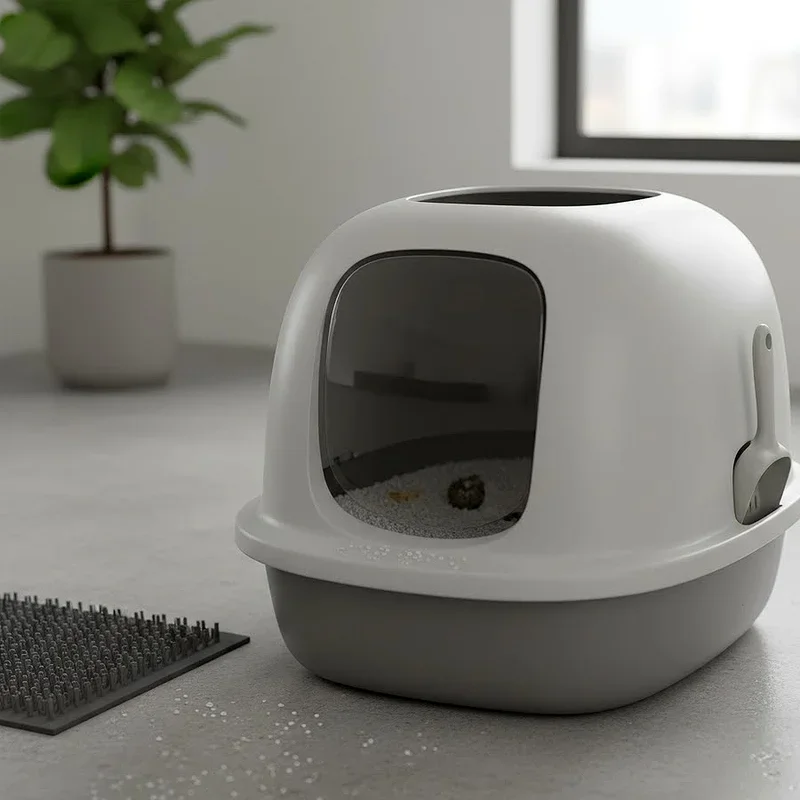
A successful litter area balances the cat’s comfort with the household’s need for odor control and easy maintenance. Good cat litter station ideas provide enough privacy without creating a sealed, difficult-to-clean enclosure. Location, ventilation, floor protection, and storage matter more than decorative camouflage because the station needs to remain practical every single day.
Pick a Quiet but Accessible Location
Cats usually need a litter location they can reach easily without passing through excessive noise or unpredictable activity. Laundry rooms, bathrooms, utility spaces, wide closets, and discreet hallway corners may work depending on the home’s layout.
Examples of thoughtful interior arrangements can help when identifying underused spaces that still feel connected to daily living. Avoid creating a station behind a door that may regularly be closed by accident.
Leave Enough Room Around the Box
An enclosure should allow the cat to turn, enter, and exit comfortably. The interior shouldn’t force the animal into a tight position simply to hide the box from view.
Add Privacy Without Trapping Odor
Furniture-style litter cabinets can make the area look tidier, but airflow matters. Openings, vents, or generous entry gaps help prevent the enclosure from becoming stale.
If the litter area sits near a secondary entrance, covered entry design ideas can inspire ways to create separation without completely closing off the zone. Visual screening is often more useful than a tightly sealed cabinet.
| Concern | Useful Feature | Why It Helps |
|---|---|---|
| Tracking | Large litter mat | Captures loose granules |
| Privacy | Screen or cabinet | Reduces visual exposure |
| Odor | Airflow | Prevents trapped smells |
| Cleanup | Washable surfaces | Simplifies wiping |
Create a Cleaning Zone Beside the Box
Keep a scoop, waste bags, hand broom, and small dustpan nearby rather than carrying them across the house each time. A narrow cabinet or wall-mounted organizer can hold supplies without occupying much floor space.
Looking at practical household storage concepts can help with separating clean backup litter from tools used around the box. Closed storage is especially useful for keeping bags, replacement liners, and cleaning products visually contained.
Control Litter Tracking at the Exit
Tracking often happens during the first few steps after a cat leaves the box. A generously sized textured mat works better than a tiny mat placed directly under the entrance.
Position the opening so the cat crosses the mat before reaching the room. If space allows, an enclosure with an offset entrance can create a short path that encourages litter to fall from the paws before the cat reaches finished flooring.
Where Litter Station Design Can Fail
Hiding the box too effectively can create problems. A beautiful cabinet is a poor choice if access is cramped, ventilation is weak, or cleaning requires dismantling furniture.
Another common mistake is putting the station in a remote location that seems convenient for humans but isn’t comfortable for the cat. Maintenance also matters. Complicated decorative surrounds may discourage frequent cleaning because every task takes longer. Choose a design that makes scooping and wiping easier, not one that simply removes the box from view.
Frequently Asked Questions
Can a litter box be placed inside a cabinet?
Yes, provided the cabinet offers comfortable access, enough interior room, and adequate airflow. The box should also be easy to remove so the enclosure and surrounding surfaces can be cleaned regularly.
How can I reduce litter tracking around the house?
Use a larger textured litter mat and position the box so the cat must walk across it before reaching the room. Regular sweeping around the station also prevents scattered litter from traveling farther.
Is a laundry room a good litter box location?
It can be, especially when the room has washable surfaces and remains consistently accessible. Some cats may dislike noisy appliances, so placement away from frequently operating machines can make the area more comfortable.
Prioritize Access and Maintenance
Choose the location from the cat’s perspective first, then add the features that make daily cleanup easier for people. Provide airflow, washable surfaces, enough room around the box, and storage for supplies. A litter station feels successful when it stays discreet without becoming inconvenient to inspect, scoop, clean, or reach.