

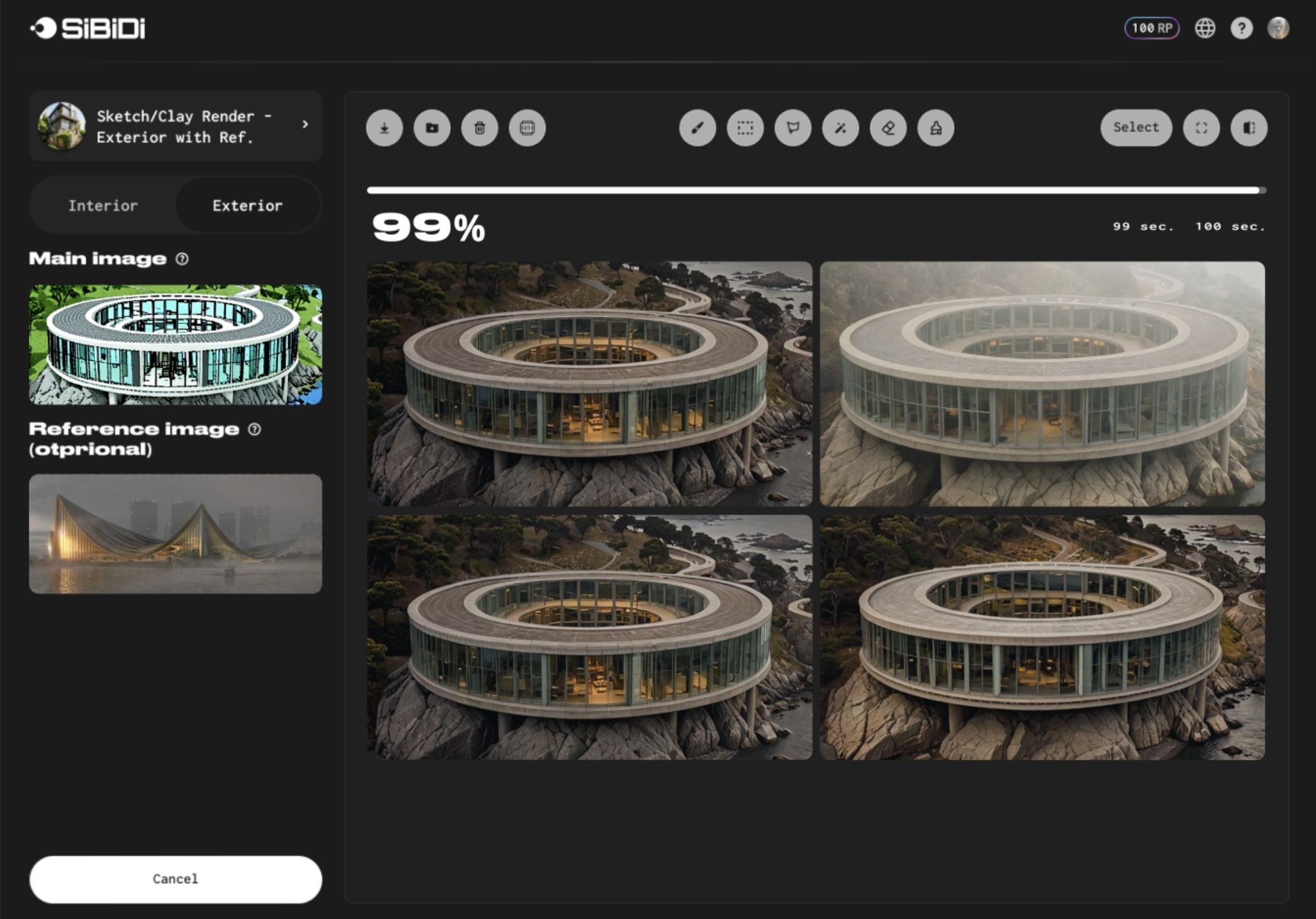
Try searching for “SiBiDi AI rendering tool,” and you’ll almost immediately run into some strange confusion involving “Skibidi.” Of course, this brings the question: is this just another internet meme that unintentionally made its way into professional software, and what is it really about?
Although SiBiDi is a legitimate tool for 3D and architectural visualization, many people instantly identify it with viral material due to the similarity of its name. Therefore, SiBiDi is ideal if you work on projects where accuracy is crucial.
It’s important to clarify one key point right away: the SiBiDi AI rendering tool has absolutely nothing to do with the Skibidi meme. They’re worlds apart. One is about professional visualization, the other about internet culture. When it comes to sibidi AI rendering software, SiBiDi falls squarely into the category of professional tools.
What SiBiDi Actually Does
To understand it, it’s worth looking at the real-world tasks this tool handles. The SiBiDi AI rendering tool was created not for experiments, but for specific workflows in design and architecture. Here’s what it actually does:
- Convert CAD models to renders without losing structure.
- Creates photorealistic architectural renders for presentations and approvals.
- Works with actual files, not abstract descriptions.
- Supports integration into designers’ workflows.
This isn’t just another image generator; it’s AI rendering software that takes technical models and transforms them into a visually stunning final product.
Built for Real Workflows
One recurrent issue in design and architecture is that many tools appear fantastic in demonstrations but provide quite different outcomes in real-world settings. SiBiDi presents itself as an AI tool for architects and designers that is intended for practical applications. In real life, this entails:
- fast performance without lengthy setup;
- control over the result at every stage;
- minimization of manual edits after rendering;
- support for real-world project workflows.
It’s also worth noting that SiBiDi operates as a prompt-free AI. This means users don’t have to constantly come up with text prompts, as is the case with many generative systems. This changes the very approach to work and makes the process more predictable.
Technology Difference
Here is an important point that is often overlooked, but it is precisely this that explains the difference between SiBiDi and typical image generators. SiBiDi uses proprietary AI models. These are in-house models that do not depend on third-party generative systems.
And here, it is essential to clearly distinguish, once again, that this is not Midjourney. It is not a system for creating artistic scenes based on text, nor is it a tool for creative experiments. Its task is different:
- to preserve the structure of CAD models;
- not to alter the geometry;
- to maintain the logic of the architectural project.
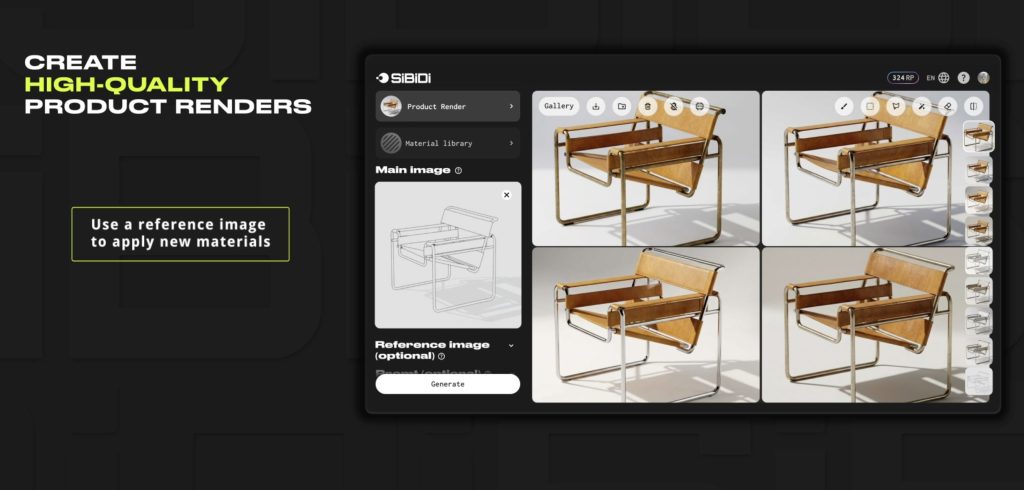
It’s also worth mentioning material replacement AI, which allows you to change materials without fully re-rendering the scene. This is critical for working with design options when you need to show several solutions quickly.
Many people also underestimate the stability of the results. In professional work, it’s important that the tool doesn’t “invent” a new structure every time, but rather follows the project’s logic.
Key Advantages
When you work with SiBiDi, it becomes clear why this system is classified as architectural rendering AI rather than an AI visualization tool. You gain efficiency in real-world projects, where every change matters and is more significant than the sheer number of features.
This is especially true if you’ve ever encountered a situation where a minor change ruins the entire project or leads to an unexpected result. This affects the stability of these tools, not their aesthetic appeal. But SiBiDi’s advantages confirm the reliability of this tool:
- real-time editing while working with the renderer allows you to see changes immediately, without unnecessary restarts;
- predictable results without random scene changes give you a sense of control over the process;
- consistent visualization quality even when changing parameters;
- quick updates to design options without losing the scene’s structure.
With this set of features, it becomes easier to understand the tool’s logic. When working on architectural projects, it’s not just about getting a “pretty picture.” The key question is always different: can the result be replicated, can it be trusted, and will you have to start the process from scratch after every edit?
That is precisely why SiBiDi positions itself as AI rendering software that helps you work in a stable environment, rather than turning the process into a series of constant experiments with no guarantee of results. And although SiBiDi is often misunderstood because of its name, in practice, it is a tool for a completely different level of tasks. It is not about memes, random generation, or entertainment.
It is a professional system for those who work with architectural models and need stable results without unnecessary surprises. And looking at the bigger picture, SiBiDi fits well into the new generation of AI-powered rendering platform, where the main value lies not in creative chaos but in the accuracy, speed, and controllability of the process.


