
A ski run begins long before the first turn, just as a successful cycling session involves more than time spent in the saddle. Preparation, physical awareness, reliable equipment, and access to meaningful activity data all shape the experience. For outdoor enthusiasts who move between mountain trails, city roads, golf courses, and running routes, a smartwatch should feel like part of their equipment—not another device demanding constant attention.
Designed for adults with active lifestyles, the Watch GT 7 pro brings together premium materials, dedicated sports modes, a practical strap system, and battery life of up to 21 days. The result is a high-end sports smartwatch built to support both structured training and everyday movement.
Premium Materials for an Active Lifestyle
Outdoor equipment must be functional, but that does not mean it should look purely technical. A smartwatch may be worn during a morning run, throughout the working day, and later at a social event. Its materials and finish therefore matter as much as its digital features.
The Watch GT 7 pro uses titanium and nano-tech ceramic, giving it a refined appearance suited to professional and casual settings. These flagship materials also complement the demands of an active routine, where a watch may encounter frequent movement, changing environments, and repeated daily wear.
Titanium brings a distinctive premium character, while nano-tech ceramic adds a polished visual element to the overall design. Together, they create a watch that can accompany technical outdoor clothing without feeling out of place with business or evening attire.
This versatility is particularly useful for people who prefer to wear one dependable device throughout the day. There is no need to treat the watch as sports-only equipment or reserve it for specific occasions.
Purpose-Built Skiing and Cycling Modes
General activity tracking has its place, but committed athletes often want features designed around the way a specific sport is performed. Skiing and cycling involve different environments, movement patterns, and planning needs. Dedicated modes can therefore make recorded information easier to understand and more relevant to the activity.
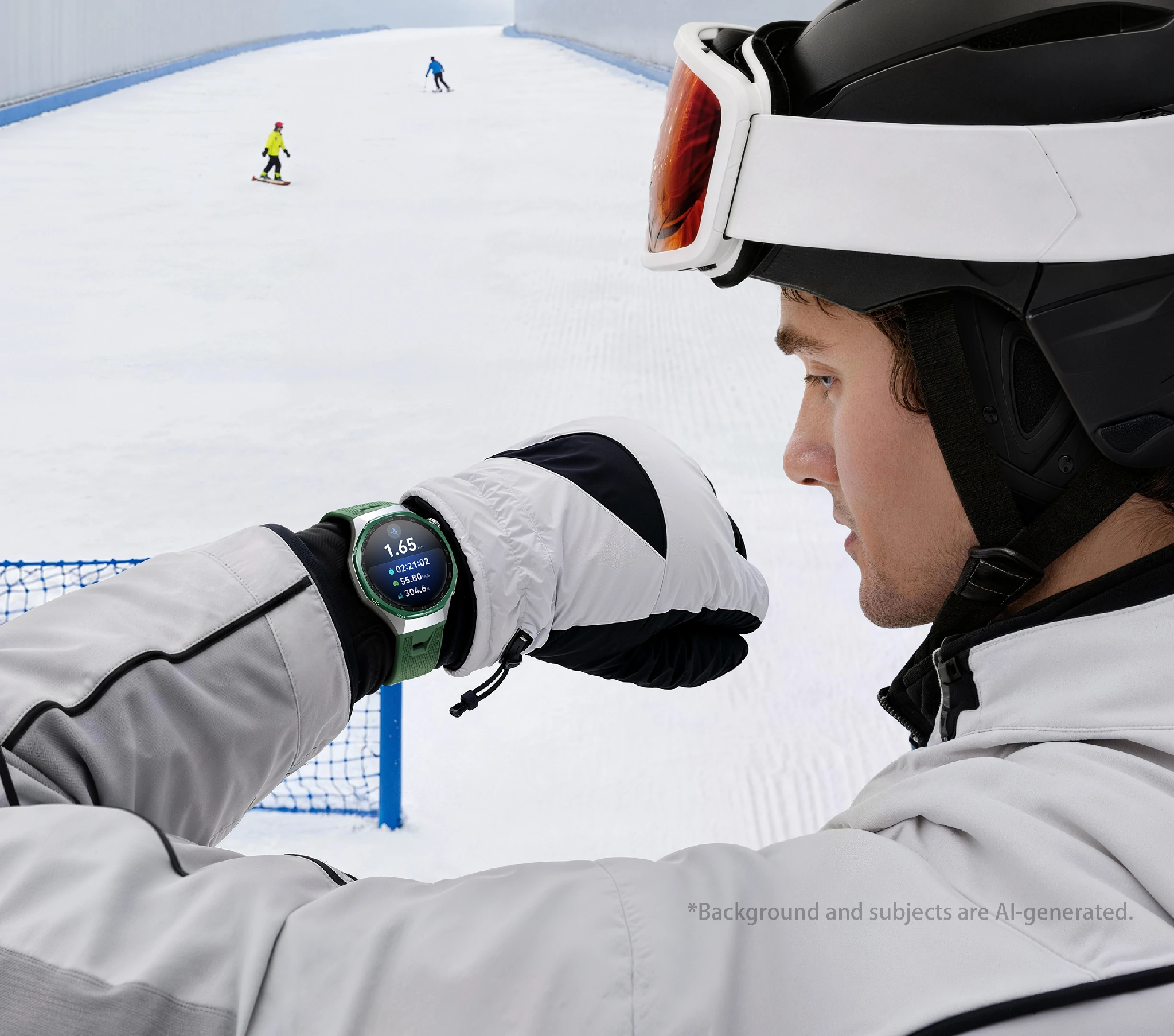
The all-new skiing mode is intended for users who want their smartwatch to play a more active role during time on the slopes. Skiing sessions can change quickly as terrain, weather, and personal energy levels shift. Having activity information available from the wrist helps users remain engaged with their session without repeatedly reaching for a phone.
For cyclists, the all-new cycling mode supports a more focused approach to rides. It can fit into several common scenarios, including:
- Early-morning road cycling before work
- Weekend endurance routes
- Relaxed group rides
- Outdoor fitness sessions
- Regular cycling used as part of a broader training plan
The goal is not simply to collect numbers. Useful sports data should provide context for movement, helping cyclists understand their sessions and develop more consistent habits over time.
Supporting Running and Golf Routines
Running remains one of the most accessible ways to build an outdoor fitness routine. It can be adapted to different schedules, locations, and levels of experience. A short weekday run may focus on maintaining consistency, while a longer weekend session can become part of a structured endurance plan.
A wrist-based device helps keep essential activity information accessible while allowing the runner to stay focused on breathing, rhythm, and surroundings. This is especially valuable on unfamiliar routes, open trails, or longer sessions where repeatedly checking a phone can interrupt momentum.
Golf creates a different kind of demand. A round can last for several hours and involve extensive walking, changing weather, and long periods away from a charger. In this setting, comfort and battery endurance become particularly important. A premium smartwatch can remain part of the golfer’s wider activity routine while fitting naturally with the sport’s more traditional clothing and atmosphere.
By serving multiple outdoor interests, the device gives active users a more unified way to approach movement. Skiing, cycling, running, and golf may require different skills, but they all benefit from consistent access to information and dependable on-wrist support.
Up to 21 Days of Battery Life
Battery anxiety can become a genuine distraction during outdoor activities. A watch that requires frequent charging may be easy to forget before a long ride, a weekend in the mountains, or several days of travel. Long battery life reduces that friction and allows the device to remain ready for more of the user’s schedule.
With up to 21 days of battery life, the Watch GT 7 pro is designed for extended use between charges. Actual endurance can vary according to settings, enabled functions, and individual usage patterns, but the maximum capacity provides valuable flexibility.
Long battery performance is relevant in several practical situations:
- Multi-day outdoor trips: Users can spend more time focused on the journey and less time managing charging accessories.
- Frequent weekly training: Several running or cycling sessions can fit into one routine without charging after every activity.
- Business and leisure travel: Fewer charging interruptions simplify packing and daily planning.
Long days on the golf course or slopes: The watch can remain available throughout an extended day outdoors.
Everyday wear: Work, exercise, sleep, and leisure can form a continuous schedule rather than separate device-use periods.
For people balancing professional responsibilities with regular sport, this endurance supports continuity. The watch is more likely to be available when an unexpected training opportunity appears.
EasyCross Strap for Fast Changes
A strap has a direct effect on how a smartwatch fits into daily life. An outdoor session may call for a secure, sport-focused setup, while a meeting or social occasion may suit a different look. Traditional strap changes can take time or require small tools, discouraging users from adapting the watch to each setting.
The EasyCross Strap is designed to make changing the strap quick and straightforward. This practical system allows the watch to transition more easily between sports, work, travel, and leisure.
For example, a cyclist can prepare the watch for a morning ride and then adjust its appearance before heading into the office. A traveller can also pack alternative strap options without carrying specialist tools. This small design detail helps the smartwatch function as both performance equipment and a personal accessory.
A More Thoughtful Approach to Sports Data
More information is not always more useful. Effective training depends on seeing data in a form that supports decisions rather than creating unnecessary complexity. Outdoor athletes need to recognize patterns, understand effort, and determine when to maintain intensity or allow time for recovery.
A sports smartwatch can support this process by keeping relevant information close at hand. Over time, regular activity records may help users establish more structured routines and pay closer attention to how their bodies respond to exercise.
The watch fits naturally into this approach by bringing professional sports functions together with a design suitable for continuous wear. Rather than separating exercise from the rest of the day, it helps make movement part of a connected lifestyle.
Designed Around Real Outdoor Schedules
Active adults rarely follow identical routines every day. Weather changes, workloads increase, and travel can interrupt even carefully prepared training plans. Equipment must therefore be flexible enough to support both planned sessions and spontaneous activity.
A typical week might include:
- A short recovery run on Monday morning
- An indoor workday followed by an evening walk
- A focused cycling session in the middle of the week
- Travel on Friday without access to a regular charger
- A long golf round on Saturday
- A mountain or skiing trip on Sunday
The combination of premium construction, specialised outdoor modes, a quick-change strap, and long battery endurance makes the smartwatch suitable for this kind of varied schedule. Its purpose is not limited to a single sport or location. Instead, it can remain on the wrist as the user moves between training, travel, work, and recovery.